
Connecticut Insurance Department (CID) and Connecticut Insurance and Financial Services (CT IFS) Host Second Insuring the Future Summit
The Connecticut Insurance Department (CID) and CT Insurance & Financial Services (CT IFS) co-hosted their second annual Insuring the Future summit on September 30 at the Hartford Marriott Downtown. The full day summit, sponsored by Cognizant, brought together leaders from insurance, reinsurance, housing, banking, healthcare, and government to explore how our industry can address climate change and strengthen community resilience.
This year’s program included in-depth discussions on financing resilient communities, addressing the economic and health impacts of climate change, and the evolution of regulatory standards for climate risk disclosure, materiality assessments, and the utilization of catastrophe models. Below are some highlights from the day.
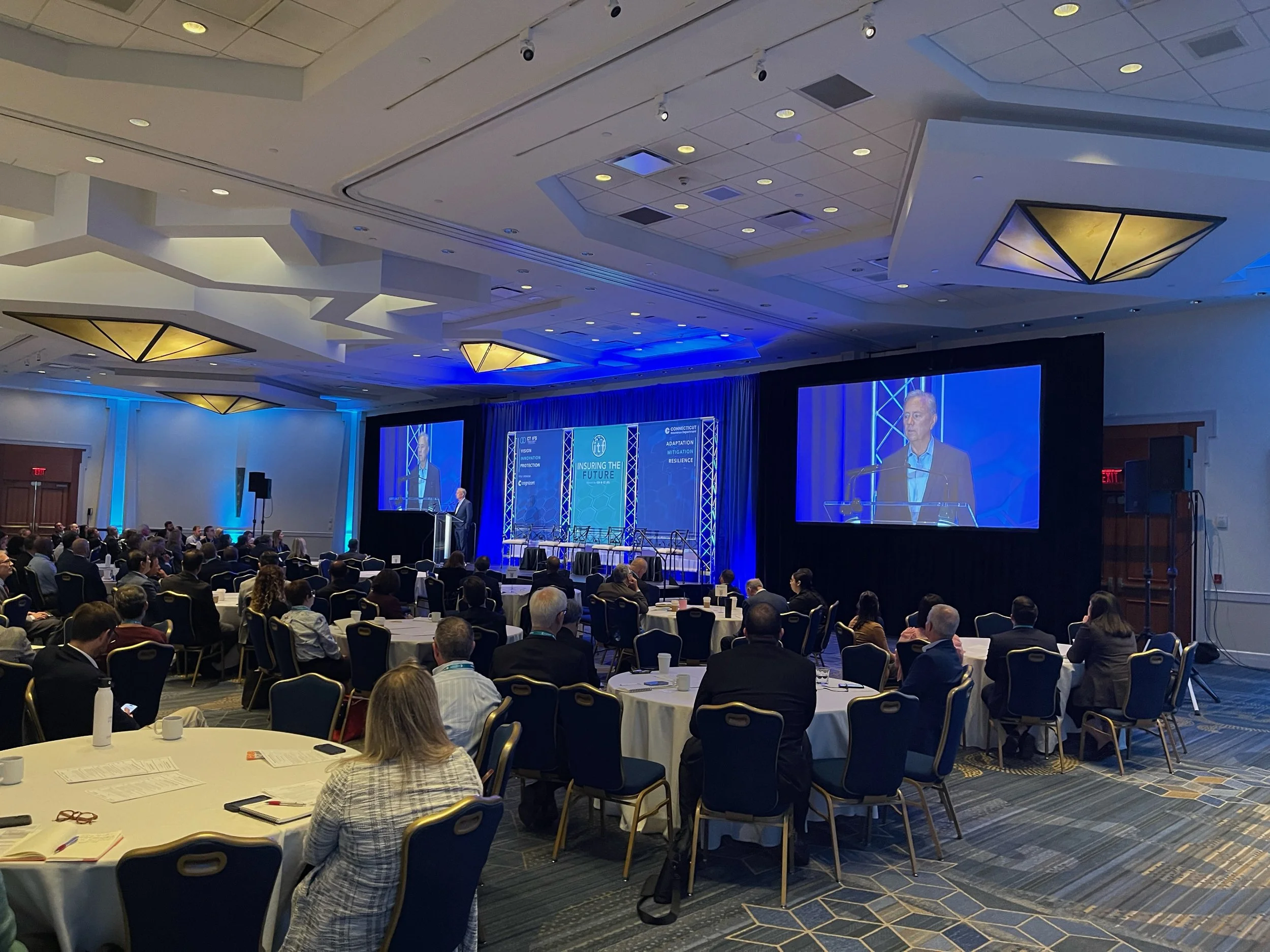
Welcome & Opening Remarks
Governor Ned Lamont, Lt. Governor Susan Bysiewicz, CID Commissioner Andrew N. Mais, and Susan Winkler (CT IFS) opened the program by emphasizing Connecticut’s leadership in resilience and innovation. Commissioner Mais announced the launch of a new climate risk mapping tool that enables Connecticut residents to assess property-level risks from flooding, wildfire, and other perils. Learn more here.
Keynote Panel: Building Climate-Resilient Communities
Panelists explored strategies for building resilient communities, particularly in historically underinsured areas. The discussion highlighted practical approaches for funding and partnerships, emphasizing how local data and market tools can help communities understand and manage risk more effectively. The session illustrated the critical link between resilience investment and faster, more defensible recovery after disasters.
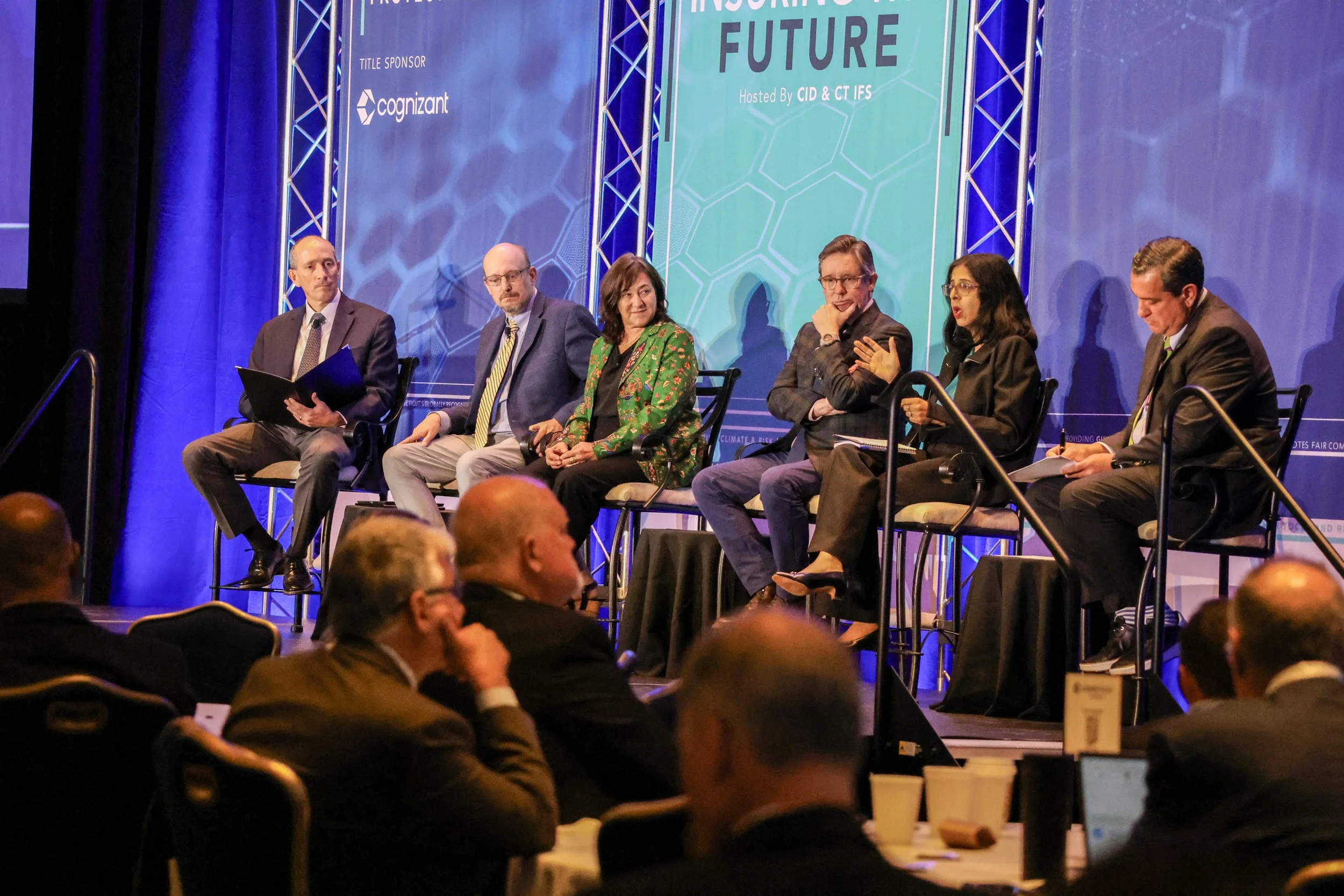
Panel 1: Managing the Economic and Social Risks of Climate Change
This panel examined the growing instability in insurance markets due to climate change and the coverage gaps that disproportionately affect vulnerable communities. Experts discussed how regulators, policymakers, and insurers can help communities navigate the economic pressures of climate risk, balancing affordability, resilience, and equity. The conversation highlighted lessons from past state efforts, innovative approaches for incentivizing mitigation, and the role of public-private partnerships in building community resilience. Panelists also emphasized the importance of consumer education in empowering property owners to proactively manage risks.
Lightning Session: Severe Weather Mitigation & Resiliency Advisory Council Updates
Members of the council provided a high-level update on initiatives aimed at strengthening Connecticut homes and small businesses against severe weather. The session highlighted emerging insights from subgroups, progress on statewide risk mitigation programs, and next steps for enhancing community resilience. The discussion emphasized collaboration among multiple stakeholders to implement actionable strategies that protect both property and residents.
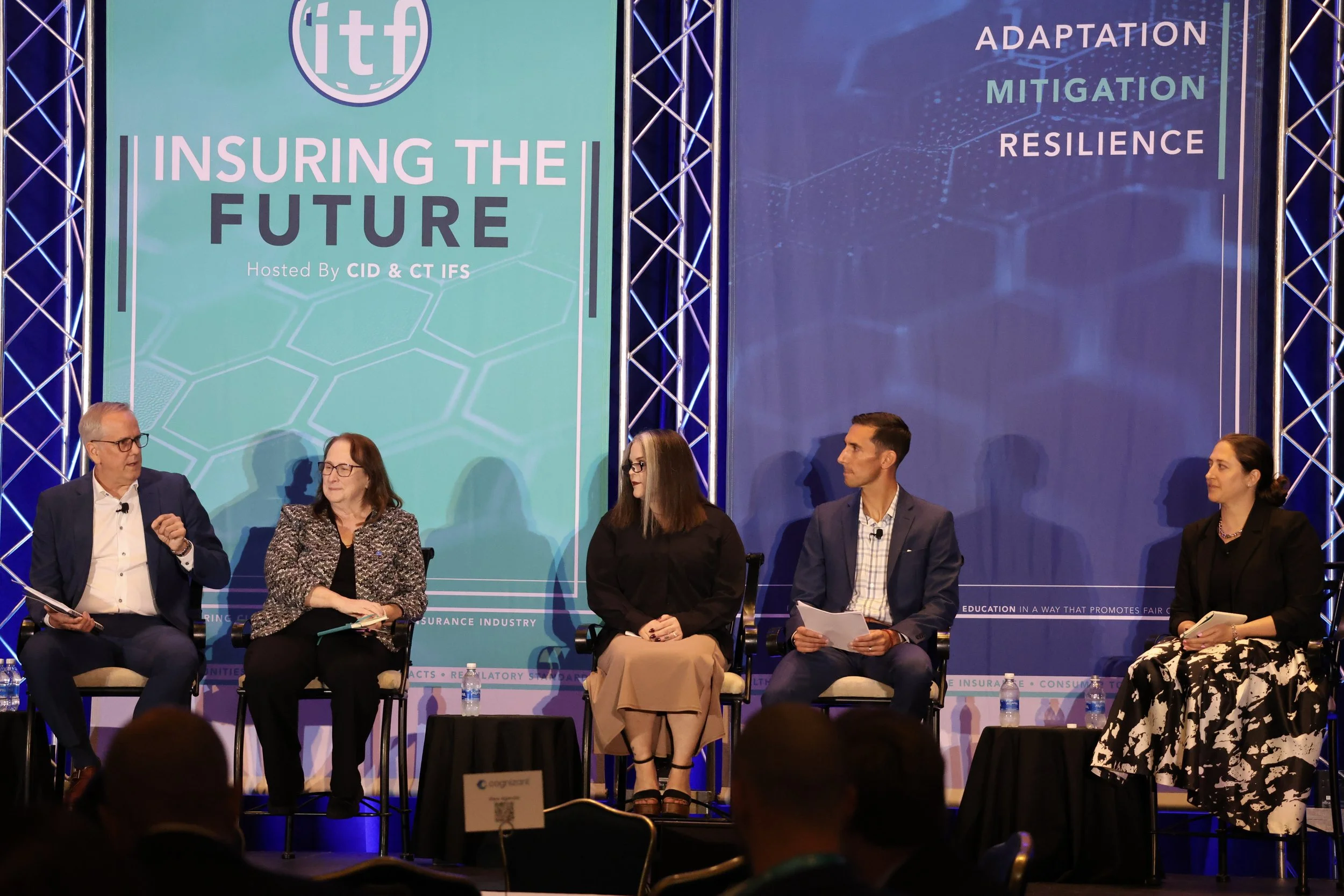
Panel 2: Climate Risk Compliance and Technical Resilience
This panel focused on how insurers are adapting to evolving regulatory expectations for climate-related financial disclosures. Panelists explored best practices for risk assessment, reporting, and compliance, while emphasizing the growing role of advanced climate modeling technologies. Discussions highlighted how improved modeling and standardized approaches can help insurers and regulators make more informed decisions, identify emerging risks, and quantify the benefits of mitigation strategies across portfolios.
Panel 3: Climate, Health Outcomes, and Insurance
Panelists explored the intersection of climate change, public health, and insurance. Topics included the health risks from heat, air quality, food insecurity, and emerging infectious diseases. Experts discussed how insurers can adapt policies, improve risk modeling, and support public health initiatives to protect vulnerable populations. The session highlighted the need for data-driven approaches and community-level planning to mitigate health impacts and ensure equitable access to healthcare in the face of climate-related challenges.
Lightning Session: Insurance Insights Report
This session showcased findings from the 2025 Insurance Insights Report, produced in partnership with CT IFS and Conning. The report provided actionable intelligence on emerging risks, insurance trends, and strategies for climate resilience, helping stakeholders make informed decisions and advance innovative risk management approaches.
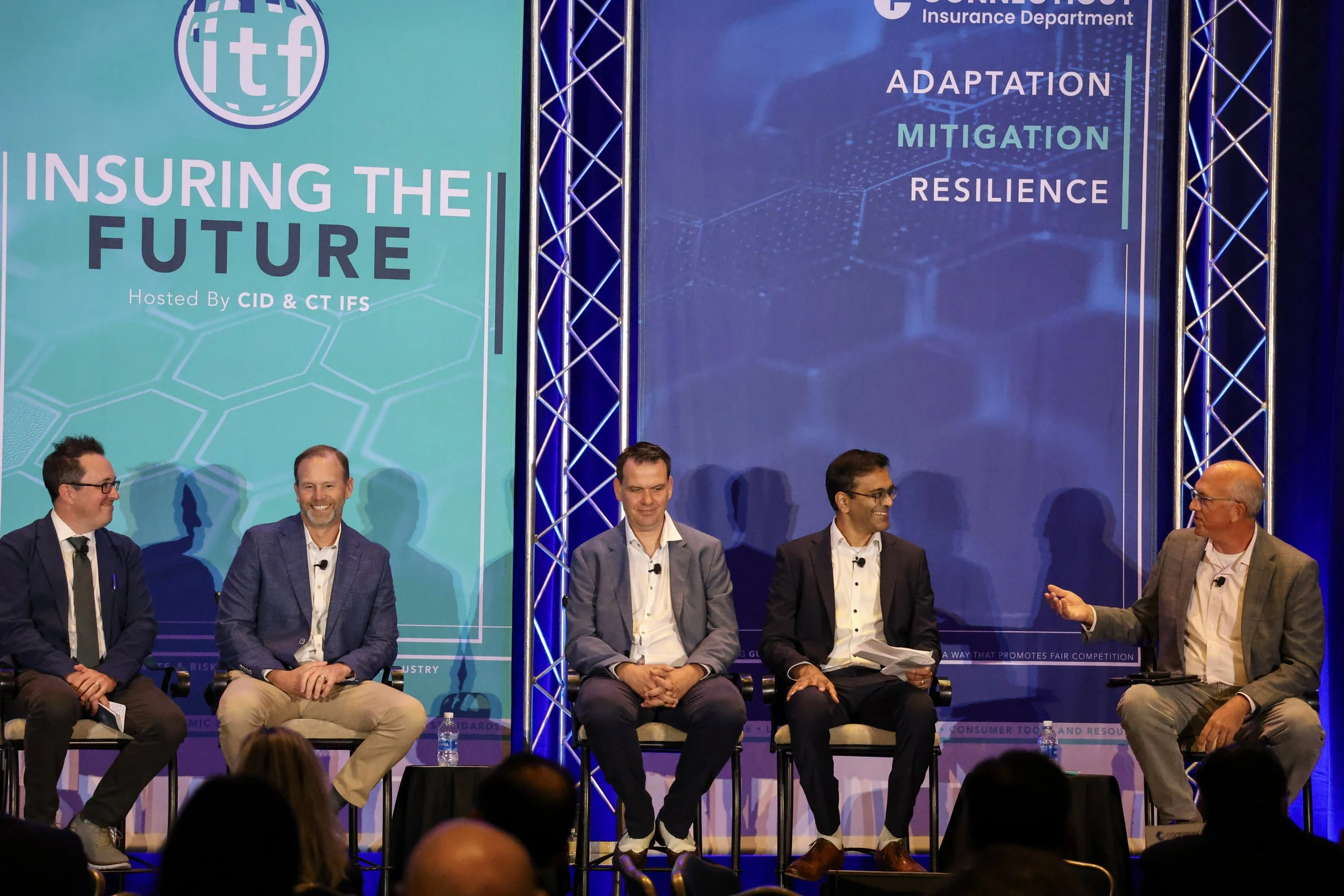
Panel 4: Innovative Insurance Solutions for Climate Resilience
The final panel examined how insurers are developing cutting-edge solutions to mitigate climate risks. Discussions highlighted innovative insurance and risk-transfer products, financial incentives for risk mitigation practices, and nature-based strategies to reduce risk exposure. Panelists emphasized the role of the insurance industry in driving both adaptation and recovery, demonstrating how forward-looking policies and technological solutions can enhance resilience for communities and businesses alike.
To view more photos from this year’s Insuring the Future summit, please visit the Photo Gallery.
The Insuring the Future team sends thanks to everyone who joined them at this year’s summit to help advance this important conversation.